Handling of Films and Paper Interlayers
Abstract
Metal components are coated with a film of oil for corrosion protection. This oil film contaminates the containers used for transport. In order to reduce contamination and the associated cleaning effort, films are used as interlayers. They separate the oily components from the container.
The aim of this thesis is to develop a concept for placing interlayers into a box and to compare it with existing approaches. The interlayer is to be grasped and prepared for placement into the box. This includes unfolding it and adapting it to the box. The robot should then insert the interlayer and verify its correct positioning.
In a first stage, a concept for a paper interlayer is to be developed. This is subsequently transferred to plastic films.
Motivation
Metal components are coated with a film of oil for corrosion protection. This oil film contaminates the containers used for transport. In order to reduce contamination and the associated cleaning effort, films are used as interlayers. They separate the oily components from the container.
Topic Area
Placing the interlayers is challenging due to the flexibility of the thin films and paper layers. Correct placement of the interlayers is essential. This requires deliberate folding in order to adapt the interlayer to the box. During the process, unintended folds of the interlayer may occur. These have to be unfolded so that the interlayer can be placed flat. A further challenge, particularly with films, is the electrostatic adhesion of the film surfaces. The adhering film surfaces have to be separated again by the robot.
Description
The aim of this thesis is to develop a concept for placing interlayers into a box and to compare it with existing approaches. The interlayer is to be grasped and prepared for placement into the box. This includes unfolding it and adapting it to the box. The robot should then insert the interlayer and verify its correct positioning.
In a first stage, a concept for a paper interlayer is to be developed. This is subsequently transferred to plastic films. Robot cells with collaborative robots from Universal Robots are available for validation. Experiments to validate the concept can be carried out at the Technology Transfer Centre Nürnberger Land in Lauf.
Requirements
- Programming skills (preferably Python and/or C++)
- Ideally initial experience with ROS
- Interest in grasping textile materials
This topic is suitable for a bachelor’s, project or master’s thesis and can also be combined with further topics for an M-APR.
Supervision
| Role | Name | |
|---|---|---|
| Supervisor | Prof. Dr. Christian Pfitzner | christian.pfitzner@th-nuernberg.de |
| Co-Supervisor | M. Sc. Patrick Fußy | patrick.fussy@th-nuernberg.de |
Location: TTZ Nürnberger Land, Martin-Luther-Straße 18, Lauf an der Pegnitz
Further information: TTZ Nürnberger Land · Mobile Robotics Lab
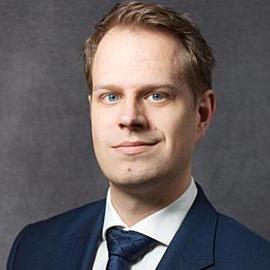
Prof. Dr. Christian Pfitzner
Professor of Mobile Robotics
Professor of Mobile Robotics at TH Nürnberg Georg Simon Ohm, Faculty efi. Director of the TTZ Nürnberger Land. Research interests in autonomous navigation, drone technology and sensor fusion.